
10 September 2026
Renovating Rental Units in a Holiday Park - How to Plan the Season
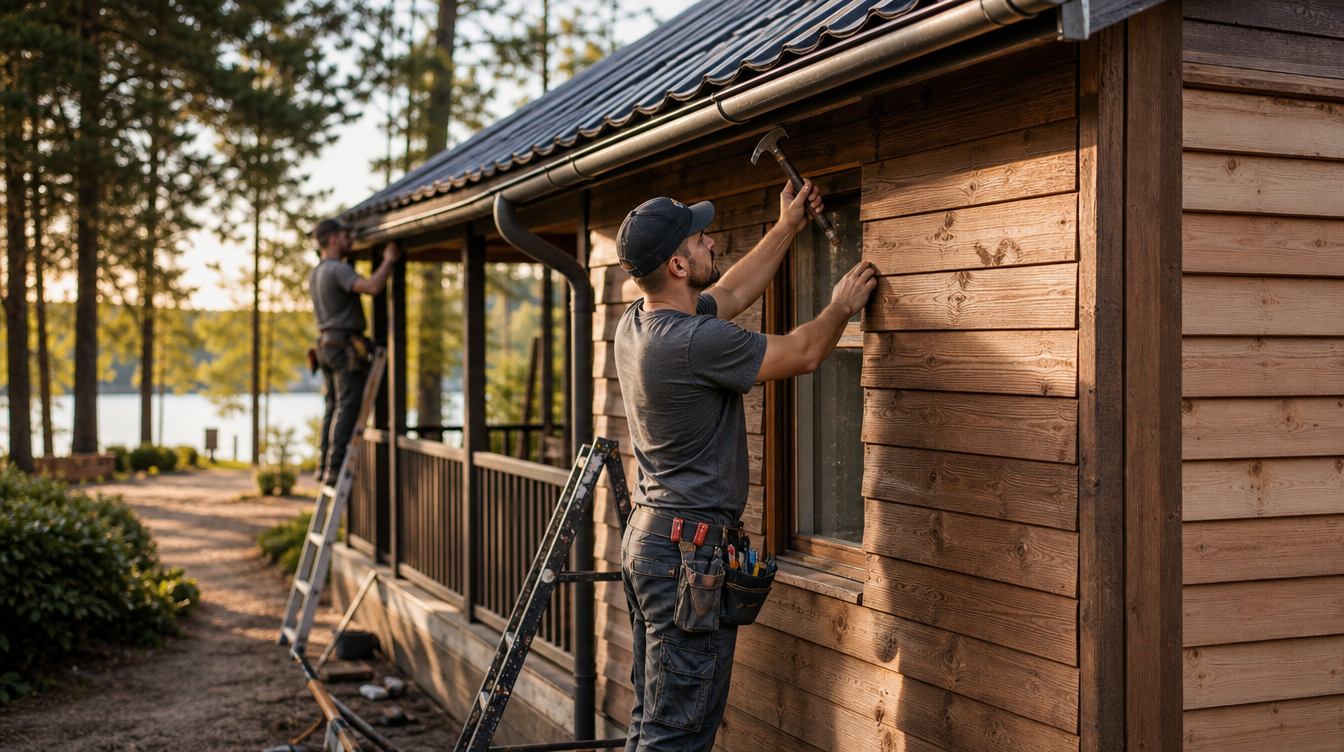
Why renovation in a holiday park follows different rules
Renovation in a holiday park follows different rules, because it involves the booking schedule, logistics across a large site, and neighbouring guests who are using the pool or playground at the same time. Every day a cottage stands closed outside the plan is lost rental revenue, and with 200-500 units the scale of this problem grows quickly.
On top of that, there is site access and internal roads, which must remain passable for guests while also allowing construction crews to work. The renovation plan must account for all of this before anyone steps in with tools.
The first step is not choosing a contractor, but determining how many units can actually be taken out of rental within a given time window without harming occupancy. Only on this basis can the schedule and budget be sensibly arranged.
When to plan a renovation so it doesn't collide with the season
The best time for a major renovation is a period of low occupancy - usually early spring or late autumn, depending on the park's location. Works planned outside the peak season keep the risk of conflict with bookings to a minimum.
Targeted repairs during the season
Not every renovation can be postponed to the off-season. A utility failure, a damaged terrace or a destroyed facade of one cottage require an immediate response, regardless of whether the park is full. In such situations, what matters is a crew that knows the site and can step in quickly, without weeks spent on quotes and mobilisation.
Larger scopes outside the season
Roof replacements, renovation of an entire park section or the renewal of shared infrastructure are works better placed in the window between seasons. Here, a precise schedule matters - unit by unit, so that everything is ready to welcome guests before the start of the next season.
How to divide the renovation scope into stages
It is worth dividing the renovation scope of an entire park section into three stages: a technical condition audit, determining the order of works, and technical acceptance before re-renting. Such a division allows completed units to be brought back into use gradually, instead of waiting for the entire scope to be finished.
Stage 1: technical condition audit
Before a schedule can be created, a review is needed - which cottages require a full interior and exterior renovation, which only need refreshing, and which can wait until the next season. Such an audit gives a realistic picture of costs and time, instead of rough estimates.
Stage 2: order of works
The order in which units are renovated should follow the park's layout and access to infrastructure. It is worth grouping neighbouring cottages together, so the crew does not have to move across the entire site between one building and another.
Stage 3: acceptance and handover for rental
Each completed unit should undergo a brief technical acceptance before it is re-entered into the booking system. This is the last moment to catch any shortcomings before the first guests check in.
How much does renovating a rental unit in a park cost
The cost of renovating a single unit depends primarily on the scope of works - refreshing an interior involves a different budget than a full interior and exterior renovation including the terrace and facade. Painting, minor repairs and replacement of finishing elements cost significantly less than a scope that includes structural work, insulation and larger external works. Replacing the roof of one cottage is a separate cost item, regardless of whether the interior is being renovated at the same time.
In a renewal programme covering an entire park section - several dozen units at once, plus terraces, facades and shared infrastructure elements - what matters is the rate for the entire scope, not the sum of individual quotes. SMR Properties quotes each park individually, after determining the number of units, technical condition and scope of works for an entire section or the whole property. Without knowledge of the specific park, it is not possible to give a single amount for renovating a cottage - too many variables affect the final cost, from the building's technical condition to the scope of external works.
Rather than a single price for one unit, it makes more sense to look at the cost of the entire renewal programme. The more units in a single order, the easier it is to establish a rate for the whole scope and avoid settling accounts with several subcontractors at once.
How to calculate the budget for renovating multiple units at once
The budget for renovating multiple units at once is calculated differently than the sum of individual quotes - the total scale of the scope is decisive, not the price per cottage multiplied by the number of units. With a larger number of units in a single order, the costs of crew mobilisation, material transport and setting up facilities on site are spread across the entire scope, which lowers the unit cost of each renovated cottage.
Park managers who plan a budget for the entire season usually start by adding up the units requiring a full renovation, those requiring only refreshing, and shared elements - terraces, facades, internal roads. Such a breakdown makes it possible to discuss a specific scope with the contractor, rather than an estimated amount for "park renovation" without further detail.
It is also worth leaving a margin in the budget for targeted works that arise during the season regardless of the plan - failures and damage occur even with the best-prepared schedule.
One crew or several subcontractors for the entire season
A permanent crew on site limits the number of contact points to a single contractor, while several subcontractors working in parallel - one for roofs, another for interior renovations, a third for facades - means more coordination on the park manager's side. In practice, every schedule change with several companies at once requires separate arrangements with each of them.
An alternative is a permanent renovation crew for the season at a holiday park, which stays on site and takes over the entire scope - from ongoing repairs to larger unit renovations - without changing subcontractors every month. For a park with 200-500 cottages, this means a single point of contact and one crew that knows the layout of the site from day one.
Who is responsible for worker documentation on site
A1 forms, insurance and posted-worker documentation for works carried out by foreign crews in Belgium, the Netherlands or Luxembourg are usually the responsibility of the contractor, not the park manager. This is a formality that must be handled before works begin, regardless of the scale of the order.
SMR Properties handles recruitment, worker posting and all documentation in-house, so the ordering party does not have to arrange this separately for every order. This allows the park's operational department to focus on the renovation schedule rather than HR formalities.
How to start planning a renovation for next season
Planning a renovation for next season is worth starting several months ahead of the start of the following season - this is the time for a unit audit, determining the scope, and quoting the entire renewal programme. The earlier the schedule is created, the easier it is to fit it into the window between seasons without the risk of works overlapping with the first bookings.
Contacting a contractor who understands the specifics of holiday parks at this stage means fewer surprises later, both in terms of costs and the completion dates of individual units. More about the company's scope of activity can be found on the SMR Properties website.